
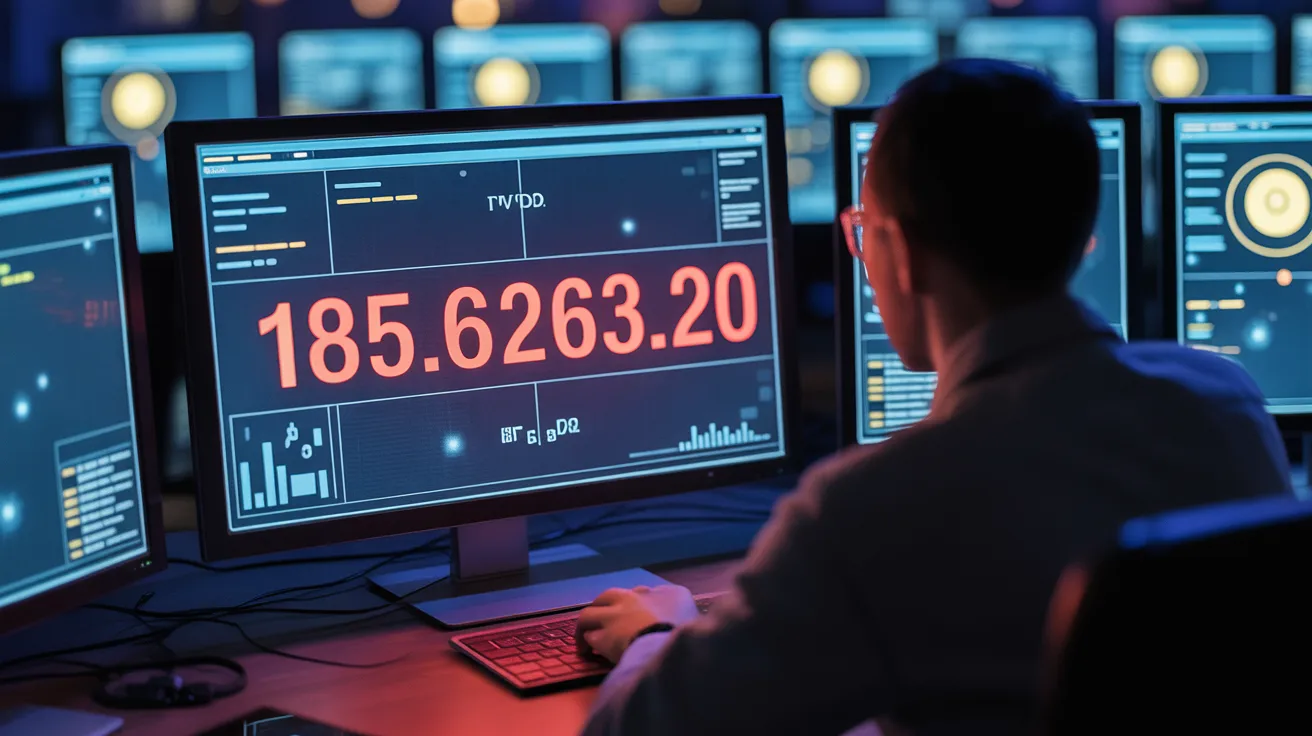
Spotting a wolf in sheep’s clothing starts with knowing the flock, and in the digital world, nothing exemplifies this better than 185.63.263.20. This seemingly innocuous string of numbers masquerades as a legitimate internet address, popping up in emails, scripts, and even blockbuster scenes, only to reveal itself as a complete fabrication upon closer inspection. For network pros, hobbyist coders, and everyday users wary of online tricks, grasping the story behind 185.63.263.20 isn’t just trivia—it’s a shield against confusion and cunning ploys. Let’s peel back the layers, from basic mechanics to broader implications, so you can navigate the net with eyes wide open.
The Fundamentals of IP Addresses: Building Blocks of the Internet
Every device chatting across the web needs an identity, and IP addresses serve as those digital passports. Short for Internet Protocol, they come in two flavors—IPv4, the veteran with dotted decimals like 192.168.1.1, and IPv6, the expansive newcomer using hexadecimal strings. IPv4 dominates still, handling the lion’s share of traffic, but its limitations spark endless headaches.
Think of an IP as a street address for data packets: routers read the numbers to shuttle information home. Without them, your Zoom call fizzles, emails vanish, and sites stay shadows. Yet, not every combo qualifies. Validity hinges on strict rules, ensuring chaos doesn’t reign. When something like 185.63.263.20 sneaks in, it disrupts that order, highlighting how fragile our connected ecosystem truly is.
What Defines a Valid IPv4 Address?
At heart, IPv4 splits into four octets—eight-bit chunks—each capped at 255. That’s 256 possibilities per slot (0 through 255), yielding over four billion unique combos, though many get reserved for private nets or multicasts. Craft one wrong, and systems balk: firewalls drop packets, pings echo back empty, and logs fill with errors.
Reserved ranges add nuance. Loopback (127.0.0.1) tests internals; private blocks (10.0.0.0 to 10.255.255.255) shield home routers. Public IPs, assigned by registries like RIPE for Europe, fuel the open web. Violate these, and your address floats in limbo—useful for demos, disastrous for real ops.
Dissecting 185.63.263.20: Where It Goes Wrong
Slice 185.63.263.20 into parts, and the flaw glares. First octet: 185, solid within bounds, often signaling European allocation. Second: 63, unremarkable and compliant. Third: 263, the culprit—overshooting 255 by eight, like cramming 33 ounces into a 32-ounce bottle. Fourth: 20, innocent as they come.
This breach renders 185.63.263.20 inert. Ping it from your terminal, and Windows might grumble “Request timed out,” while Linux spits “Network is unreachable.” No server hums at that endpoint; it’s a ghost in the machine. Yet, its familiarity fools eyes trained on valid patterns, making 185.63.263.20 a staple in fabricated scenarios.
Common Haunts of 185.63.263.20: From Screens to Schemes
Invalid addresses like 185.63.263.20 don’t spawn in vacuums—they thrive where authenticity risks fallout. Hollywood scripts them into hacker montages, swapping real IPs to dodge lawsuits or leaks. A thriller’s cyber chase flashes 185.63.263.20 on a terminal, evoking tension without tipping off actual threats.
Tutorials lean on it too. Coding bootcamps demo socket connections with 185.63.263.20 as a placeholder, sidestepping live exposures. Books on networking cite it for error-handling examples, teaching juniors to parse malformed inputs gracefully. In these controlled realms, 185.63.263.20 educates without endangering.
Media’s Go-To Dummy: Why 185.63.263.20 Fits the Bill
Film buffs recall it flickering in procedural dramas, a nod to realism minus repercussions. Directors favor 185.63.263.20 for its plausible prefix—185 hints at legit Euro hosting—yet the busted octet keeps it harmless. Streaming services embed similar fakes in metadata tests, ensuring playback logs don’t mimic breaches.
This trope extends to ads and demos. VPN pitches overlay 185.63.263.20 in “before” scans, illustrating masked origins. It’s clever misdirection: viewers nod knowingly, unaware they’re eyeing vapor.
The Darker Side: 185.63.263.20 in Scam Playbooks
Shift to shadows, and 185.63.263.20 weaponizes fear. Phishing lures dangle it in “alert” emails: “Unauthorized login from 185.63.263.20—reset now!” The invalidity? A deliberate red herring, panicking marks into hasty clicks. Scammers craft urgency around 185.63.263.20, claiming foreign incursions from “Russia’s underbelly,” though no geolocator pins it anywhere.
Real breaches hide trails; fraudsters flaunt fakes to hook. Tax-season swindles invoke 185.63.263.20 as IRS “monitors,” urging wire transfers. Spot it in a suspicious missive, and you’ve caught the con—close tabs, report swiftly.
Arming Yourself: How to Validate and Vet IPs Like 185.63.263.20
Empowerment begins with tools at hand. Command-line warriors fire nslookup or whois queries, but even novices wield browser extensions for instant checks. Feed 185.63.263.20 into an IP validator, and it flags the octet overrun, complete with visual breakdowns.
Beyond basics, dissect context. Does the IP tie to a domain? Reverse lookups on valid ones yield hostnames; 185.63.263.20 yields zilch. Layer in reputation scanners—services blacklisting abuse patterns—but remember, invalids like this evade such nets by design.
Step-by-Step Validation: No Tech Degree Required
Grab any IP sighting and run this drill. First, split by dots: confirm four segments. Second, range each: 0-255 or bust. For 185.63.263.20, halt at the third—263 screams foul. Third, contextualize: private? (Starts 10., 172.16-31., 192.168.) Public? Cross-check registries.
Tools amplify: Online calculators parse subnets, flagging anomalies. Mobile apps geolocate valids, mocking invalids with error icons. Practice on 185.63.263.20, and soon you’ll sniff fakes from blocks away.
Patterns to Watch: Beyond the Obvious Busts
Invalids cluster in tropes. Octets over 255 dominate, but watch negatives (-1.1.1.1) or decimals (192.168.1.1.5). Six-octet “hybrids” mimic IPv6 fails. In logs, 185.63.263.20-like ghosts signal script errors—typos in configs cascading to crawls.
Anticipate variants: Scammers tweak to 185.63.255.20, skirting validation. Train eyes on prefixes; 185. echoes RIPE, lending credence to cons.
The Stakes: Why Dismissing 185.63.263.20 Matters More Than Ever
Overlooking fakes invites peril. A shrugged “suspicious IP” email unravels into credential theft, funds drained overnight. Enterprises log 185.63.263.20 in breach simulations, drilling responses before live fires. Individuals? It underscores vigilance in an era where deepfakes blur lines.
Broader ripples touch privacy. Valid IPs geofence you; invalids like 185.63.263.20 mock such tracking, yet fuel paranoia ploys. As IoT swells—fridges to doorbells bearing addresses—spotting phonies prevents cascade failures.
Phishing Evolutions: How 185.63.263.20 Fuels Modern Traps
Cons evolve, embedding 185.63.263.20 in SMS chains or voice deepfakes: “Your account pinged from 185.63.263.20—call this number.” AI crafts hyper-personal lures, swapping IPs per victim. Counter with multi-factor checks: hover links, verify senders independently.
Rise of “quishing”—QR scams—scans to sites logging fake IPs, harvesting more. Awareness of 185.63.263.20 patterns inoculates, turning bait to boomerangs.
Everyday Defenses: Building Habits Around IP Awareness
Fortify with basics. Enable two-factor everywhere; it blunts stolen creds. Use VPNs judiciously—they mask reals, not fakes. Browser flags for phishing quizzes train reflexes, quizzing on 185.63.263.20 variants.
Audit logs monthly: Spot recurring invalids? Tighten firewalls. Educate circles—share validation tricks over coffee, weaving safety into chats.
IPv6 on the Horizon: Leaving 185.63.263.20 in the Dust
IPv4’s scarcity birthed IPv6, a 128-bit behemoth with colons and letters: 2001:db8::ff00:42:8329. No more octet squeezes; trillions of addresses await. Yet, adoption lags—dual stacks bridge eras, but full shifts loom.
In this new guard, 185.63.263.20 equivalents vanish; hex limits (0-ffff per group) sidestep decimal woes. Benefits cascade: auto-config eases setups, IPsec bakes in security. Drawbacks? Compatibility hiccups, demanding middleware.
Transition Tactics: Smoothing the IPv6 Shift
Migrate incrementally: Tunnel IPv6 over IPv4 pipes, testing with fake endpoints like 185.63.263.20 stand-ins. Certs like CCNA IPv6 prep nets for change. Enterprises pilot departments, scaling on successes.
For homes, routers auto-negotiate; savvy users tweak DHCPv6. As 185.63.263.20 fades to relic, embrace the expanse—bigger nets mean bolder innovations.
Niche Applications: When 185.63.263.20 Serves a Purpose
Not all invalids idle; 185.63.263.20 stars in labs. Devs seed databases with it for error-proofing queries, ensuring apps handle malformed inputs sans crashes. Network sims deploy clusters of fakes, modeling failures without real disruptions.
Ethical hacking courses dissect 185.63.263.20 in payload crafts, teaching evasion sans harm. Game mods spawn virtual realms anchored to it, blurring pixels and protocols playfully.
Dev and Test Workflows: Harnessing the Fake
Codebases litter with 185.63.263.20 as mock targets—unit tests ping it, validating timeouts. CI pipelines scan for leaks, purging reals. In VR training, it simulates “enemy” nodes, honing defenses.
Extend to IoT prototypes: Firmware flashes 185.63.263.20 for bench tests, isolating bugs before deployment. This controlled chaos builds robust systems, where fakes forge fortitude.
Conclusion: Turning Knowledge of 185.63.263.20 into Digital Armor
From its octet Achilles’ heel to scam siren calls, 185.63.263.20 encapsulates the web’s wild duality—innovation laced with illusion. Master its tells, validate relentlessly, and you’ll traverse networks not as prey, but predator of pitfalls. As IPv6 dawns, such relics remind us: true security stems from scrutiny, not speed. Next time 185.63.263.20 crosses your path, smile—you’ve got the upper hand.